Want to make the transition to a climate-friendly home, but not sure where to start? Get Your Electrification Roadmap®

A Homeowner’s Guide to the One Big Beautiful Bill Act — and What It Means for Your Heat Pump & Home Electrification Tax Credits

Thinking about going electric? There’s never been a better time.

The federal government has been offering generous tax credits for heat pumps, EVs, solar, weatherization, and more over the past few years—helping homeowners save thousands while making their homes cleaner, greener, and way more comfortable. But now, some of the most valuable credits are going away.

In July, Congress passed the One Big Beautiful Bill Act (we’d like a word with whoever named it), which officially sunsets several federal clean energy tax credits—starting as soon as this September.

This post breaks down:

  • Which tax credits are ending (and when)
  • What “installed by 2025” really means
  • What incentives are still available after 2025
  • How you can maximize savings and avoid missing out

And because there’s a lot to keep track of, we’ve put together a free downloadable checklist to help you plan your upgrades in time. 

A Note From the Herd

Before we get into the details, let’s address the Elephant in the room: this bill is a step backward for everyone. It slows progress in clean energy, threatens renewable investments, and makes electrification harder to access — especially for the communities hit hardest by climate change.

Federal tax credits may only be one piece of the puzzle, but they’re a powerful one. If you’re in a position to install this year, now’s the time to do it. A $2,000 federal credit is nothing to shrug off, and when you stack it with state, local, and utility rebates, the savings can really add up.

That said, this post isn’t here to scare you into installing this year or make you feel like it’s now or never. It’s here to explain what’s happening so you can make the best decisions for your home, your budget, and your timeline — while still taking advantage of the opportunities available.

What’s Changing—and Why It Matters

The tax credits in question were originally created under the Inflation Reduction Act (IRA) in 2023 which helped make things like heat pumps, weatherization, solar, and EVs more financially accessible.

But the One Big Beautiful Bill Act eliminates many of these credits starting in 2025 or 2026. That includes:

  • 25C credits for energy efficiency upgrades (like heat pumps and insulation)
  • 25D credits for renewable energy installations (like solar and battery storage)
  • 25E, 30C, and 30D for EVs (used and new) and EV chargers
A Mitsubishi cold climate heat pump, which qualifies for a $2,000 federal tax credit through the end of 2025.

Here’s why it matters:

  • These federal credits stack on top of local and state rebates—meaning big savings for homeowners.
  • Once they’re gone, you could lose out on up to:
    • $2,000 for heat pumps and heat pump water heaters
    • $1,200 for weatherization and insulation 
    • $600 for electrical panel upgrades (often needed for heat pumps or EV chargers)
    • $1,000 for an EV charger
    • $150 for a home energy audit
    • $7,500 for a new electric vehicle (EV)
    • 30% of the cost of solar and battery storage
  • Timing is everything—projects must be installed and fully running by the end of 2025 to qualify (except for EV chargers – those credits expire in 2026 as you’ll see below).

Key Deadlines to Know

Here’s when these federal tax credits are set to change:

UpgradeCredit EndsNotes
New & used EVsSept 30, 2025Purchase must be completed by this date to claim up to $7,500
Heat pumps, heat pump water heaters, insulation, energy audits, panel upgradesDec 31, 2025Must be installed and fully operational by this date
Solar + battery storageDec 31, 202530% tax credit, no cap; homes under construction qualify (unlike with heat pumps)
EV chargersJune 30, 2026Still plenty of time for this one, but if it’s on your radar, check now whether you’ll need an electrical panel upgrade so you can claim that credit in 2025

✔️ Installed means fully up and running in your home—not just scheduled or partially complete. You do not need to have the invoice paid in full by the deadline to claim the credit.

For the full breakdown of which tax credits are affected, deadlines, eligibility, and fine print, our friends at Rewiring America have put together an extensive guide to help you out. Your CPA is always a great resource too, if you have one. 

Why You Should Plan Ahead

We’ve seen a big uptick in demand already, and so have our industry partners. That means:

  • Installer availability will shrink the closer we get to 2025’s end
  • Projects take time to plan, permit, and install—starting now = peace of mind
  • Elephant homeowners who sign contracts in August 2025 are guaranteed a 2025 install

We’ll continue monitoring our capacity and keep you posted if anything changes. But if you’ve been on the fence about upgrading, this is your sign. 🐘

Special Note for Massachusetts Homeowners

If you’re in Massachusetts and want to take advantage of Mass Save® rebates or the 0% interest HEAT loan, there’s a few extra steps you’ll need to factor in:

  1. Schedule a free home energy assessment through Mass Save (required to access the rebates and loan)
  2. If your home needs weatherization—like insulation or air sealing—this usually needs to be completed before your heat pump installation. The good news? Weatherization improves efficiency and may let you install a smaller, less expensive system.
  3. Apply for the HEAT loan (if you’re using one), which adds more time to the process.

Between scheduling the assessment, completing any required weatherization, and processing loan paperwork, you should plan for 3–4 weeks of admin time before your install can even be scheduled.

To sum it up: in Massachusetts, the earlier you start, the smoother the process—and the more likely you are to lock in your install in 2025.

Heat pump + solar = a win for this Massachusetts home (the 30% solar tax credit ends in 2025).

What Stays After 2025?

We promise it’s not all doom and gloom. Even after the federal credits expire, state and utility rebates are still going strong.

Here are some of the major heat pump rebate programs in the states where Elephant operates — and keep in mind, there are plenty of additional (stackable) rebates available through local utilities and cities.

  • Massachusetts: Up to $9,000 through Mass Save + 0% interest HEAT loans (Whole-home rebates are up to $10,000 through 2025, drop to $9,000 in 2026, and $8,000 in 2027.)
  • Colorado: Up to $8,430 through Xcel Energy
  • California: Up to $1,500 through TECH Clean California, plus up to $8,000 for income-qualified homes through HEERA

Check out the full breakdown of rebates in your state or see what you qualify for in our cost calculator.

Important: Many rebate programs are first-come, first-served and funding can run out at any moment. So if you’ve been thinking about electrifying, don’t wait until the last minute.

Free Checklist: Everything You Need to Electrify Before the Deadline

We know this is a lot. That’s why we made a simple, no-fluff checklist to help you plan:

✅ What projects qualify for 2025 federal tax credits
✅ Key deadlines to hit
✅ Questions to ask your installer
✅ What paperwork to save for tax season
✅ When to act to lock in an install before the rush

Final Word

We always say the best time to electrify is today—but right now, that’s more true than ever. With federal tax credits ending soon and state rebates still rich, there’s a huge window of opportunity to save big and make your home cleaner, greener, and more comfortable. 

And remember, you’re not alone in this — the Herd is here, and so are the states, cities, utilities, and nonprofits all working to make electrification accessible well beyond federal legislation. 

Have questions? Want to see what you qualify for?
Let’s talk → Schedule a call with our team

Partnering with Groundwork Denver to Make Heat Pumps More Accessible to Local Communities

At Elephant Energy, we believe everyone deserves the benefits of home electrification and energy efficiency—without barriers in the way. But even as clean energy gains momentum, too many communities face high upfront costs, limited financing, and uneven access to trusted contractors. That means too many families are missing out on the comfort, savings, and health advantages of clean, electric heating and cooling.

That’s why we’re excited to partner with Groundwork Denver—a nonprofit organization that’s been deeply rooted in community, environmental justice, and improving the physical environment across the Denver metro since 2002. They work side by side with residents in neighborhoods like Globeville, Elyria‑Swansea, Westwood, Montbello, Commerce City, and Sheridan to create real environmental improvements and leadership opportunities. Their mission: build a healthier, more equitable, and sustainable urban environment through hands-on projects like tree planting, urban greening, and water quality improvements.

As a first step in our partnership, we’re launching a small pilot to offer no-cost home electrification upgrades—including heat pumps and heat pump water heaters—to a limited number of households.

“Groundwork Denver is excited to expand its energy efficiency options for clients to gain access to renewable electrification. This is Groundwork Denver’s next step in supporting communities with energy efficiency, and we are excited to see how this pilot partnership with Elephant Energy grows in the years to come” 

Derek McCoy, Executive Director, Groundwork Denver

Already weatherized and powered by solar, this home got a zero-cost heat pump through our work with Groundwork Denver—making it a true electric powerhouse.

Why This Partnership Matters

Groundwork Denver has deep, long-standing relationships in the communities they work alongside. Through energy audits, they help identify households that stand to benefit most: families with failing furnaces or poor indoor air quality. Their role in outreach and education ensures homeowners hear about these upgrades from a familiar, trusted source—making it easier to take the leap.

From there, Elephant Energy brings the technical expertise: system design, installation, and helping each resident feel confident using their new equipment. Every installation is fully funded, covering not just heat pumps and installation but also any needed weatherization or energy efficiency improvements to make the system perform at its best. That means zero cost to the homeowner.

“Even in an early-stage effort, partnering with Groundwork Denver is key to reaching select households who haven’t had access to—or awareness of—technologies like heat pumps,” said Gurbani Singh, Partnerships and Environmental Justice Lead at Elephant. “Groundwork Denver opens the door, and we bring the solutions and contractor support to help make electrification possible for this first tranche of homes.”

Starting with Impact: Our Earth Day Project

We kicked off the partnership on Earth Day ​​by replacing a 22-year-old gas furnace and swamp cooler in a Denver home—at no cost to the homeowner. With solar panels already in place and weatherization completed through Energy Resource Center’s Weatherization Assistance Program, this home became an electric powerhouse—efficient, comfortable, and nearly fossil-fuel-free. 

This installation represents everything we’re working toward—a home that’s not just more comfortable, efficient, and safe, but free from fossil fuel dependence. It’s one home, but it’s part of a much bigger movement toward energy justice and community-centered climate solutions.

Celebrating our Earth Day Heat Pump Giveaway with Groundwork Denver 

The Bigger Picture

We know that a one-size-fits-all approach doesn’t work when it comes to making homes healthier and more efficient. A successful energy transition needs to be people-centered. That means starting with what each household actually needs to be safe, comfortable, and healthy—whether that’s smaller energy efficiency work like weatherization or larger electric upgrades like heat pumps.

This pilot lets us test our approach, learn from each installation, and build a partnership that can grow to serve even more families over time. Each project teaches us how to make energy upgrades more accessible and impactful.

What’s Next

As we complete installations and gather insights, we’ll share updates that highlight the impact these improvements make for families and the community. This pilot is just the beginning. With continued success, we look forward to expanding this model to reach and support many more Denver families in the years ahead.

Elephant Energy & Walden Mutual: Sharing Common Ground When it Comes to Local Impact

If you’ve been following along, you already know that we believe deeply that the path to a sustainable future is paved with many individual actions–we all get to choose how we spend our money, and those choices can impact climate progress. We also get to choose where we invest it. That’s why we’re thrilled to introduce our partnership with Walden Mutual Bank. Choosing to work with Walden was easy, because the overlap of our missions is so natural. We both stand on the common ground that individual choices have the power to drive significant collective change.

Curious about banking with Walden? Read on for a special opportunity to sign up for an individual account! 

Why Walden Mutual? A Line of Credit for the Planet

In need of working capital, we found a mission-aligned partner in Walden Mutual. Their understanding and support of our vision made them the ideal lender for us. Support from Walden marks a significant step in Elephant’s journey, and will enable us to confidently pursue our next phase of growth.

To understand why Walden’s philosophy is so unique, it’s important to first understand what a mutual bank is! Put simply, it’s a financial institution that’s owned by its own depositors (everyday people, like you and me) rather than shareholders, which in turn allows the bank to focus on serving the needs of its members and local community. So, while corporate banks continue to invest deposits in unsavory segments like the fossil fuel industry, Walden only lends to 100% mission-aligned borrowers with a focus on farms, local food businesses, nonprofits, and other sustainable businesses (like us!).
For context, the concept of a Mutual Bank model isn’t new – but it has also become increasingly uncommon. When Walden Mutual opened its doors in 2023, it was the first of its kind in almost 50 years.

The Walden Mutual Difference

A Partnership with Perks

Ready to reexamine where your money is being put to work? Opening an account with Walden may be for you. If you decide to open an account with Walden Mutual and use promo code ELEPHANT by May 31st, 2024, you’ll receive a $100 credit to spend at a range of Walden’s partner businesses, including right here at Elephant Energy.

Importantly, with Walden Mutual, your savings stretch much further than simply earning interest. They become an actionable tool for change when they are invested in renewable energy projects, sustainable agriculture, and local communities. Have questions? Check out Walden’s offerings here

Join Us

At Elephant, a key part of our mission is empowering homeowners to take personal climate action – knowing that the impact of that action spans so much further than the four walls of our own homes. Choosing to bank with Walden Mutual is another one of those choices–a choice that we have made, too. Using your savings not only to earn dividends, but also fund a more sustainable future, sounds like a win-win to us.

Eager to make more climate-friendly choices? Check out our tool, Your Electrification Roadmap®. A few simple questions will get you a personalized plan for a sustainable home. Together, we can make choices that truly make a difference.

5 Ways to Hard Launch your Relationship (With your Heat Pump)

Valentine’s Day is a time of public declarations – when even those of us that typically refrain from PDA find the courage to tell the world, “hey, just in case it wasn’t clear, I really love this person!”. This can take many shapes and forms–engagement, marriage–and even the “hard launch”, which often happens on our social media feeds.

We’re here with a hot take: if you have a heat pump, it’s time to hard launch your relationship with it this Valentine’s Day.

Why? Well, put simply, personal climate action is contagious – in a good way! Research on solar panel adoption (replicated many times, in many geographies) shows that the biggest predictor of whether you will purchase solar panels is whether your neighbor has already done so! Why? As Katherine Hayhoe so eloquently explains, this lowers “the ‘cost’ of information”. Knowing that you can go down the street and ask who installed the equipment and how it went is, well, comforting.

This isn’t the only research that underscores the importance of social proof when it comes to home electrification, though. A study recently published in the journal Energy Policy about household energy decision-making and technology adoption in the U.S. found that the top two information sources homeowners sought after during their consideration process were (1) their own friends and family (~42% survey respondents), and (2) online reviews (~36% of survey respondents).

Here’s the tricky thing about heat pumps and heat pump water heaters though, though. These HVAC systems are hidden away in our basements, utility closets, and backyards – entirely out of sight from the neighbors, typically. Remember the old conundrum, “If a tree falls in a forest and no one is around to hear it does it even make a sound?” Feels pretty relevant here!

The point is, taking a public stand for personal climate action can dramatically accelerate the pace of progress in your orbit. By taking a few minutes to  “hard launch” your home electrification efforts, you have the opportunity to create a ripple effect of decarbonization far beyond the four walls of your own home.

How to “Hard Launch” your heat pump (on social)

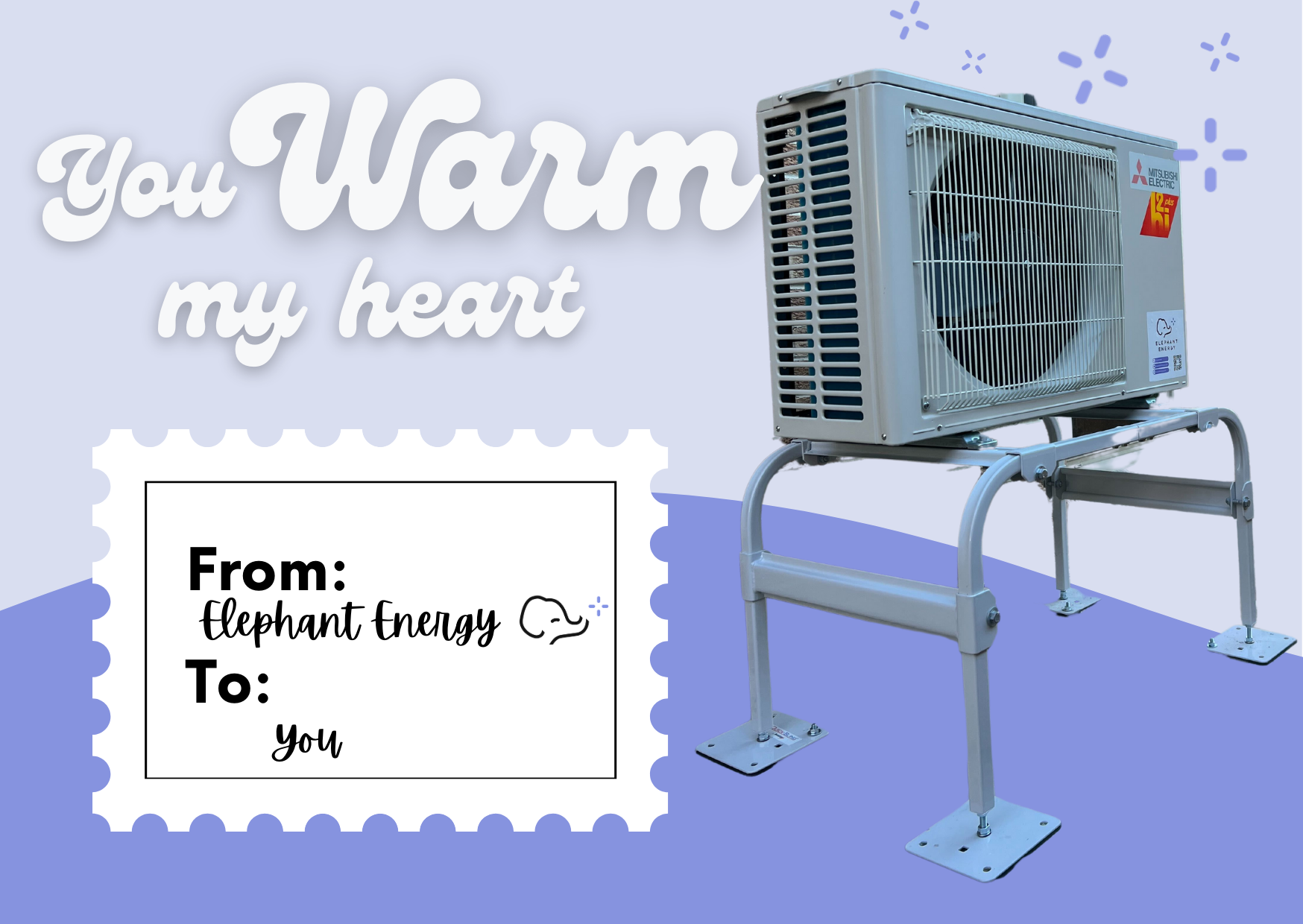
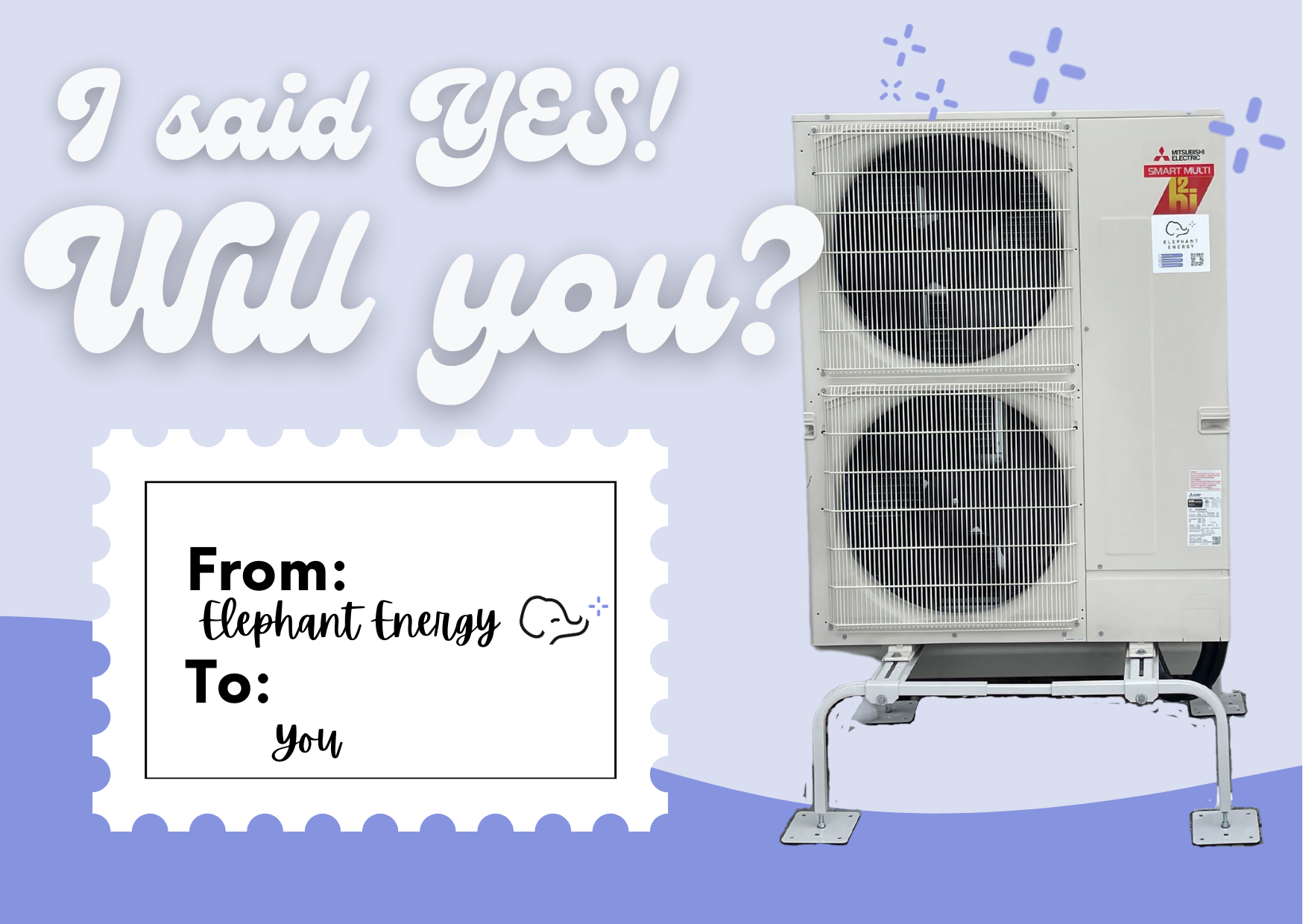
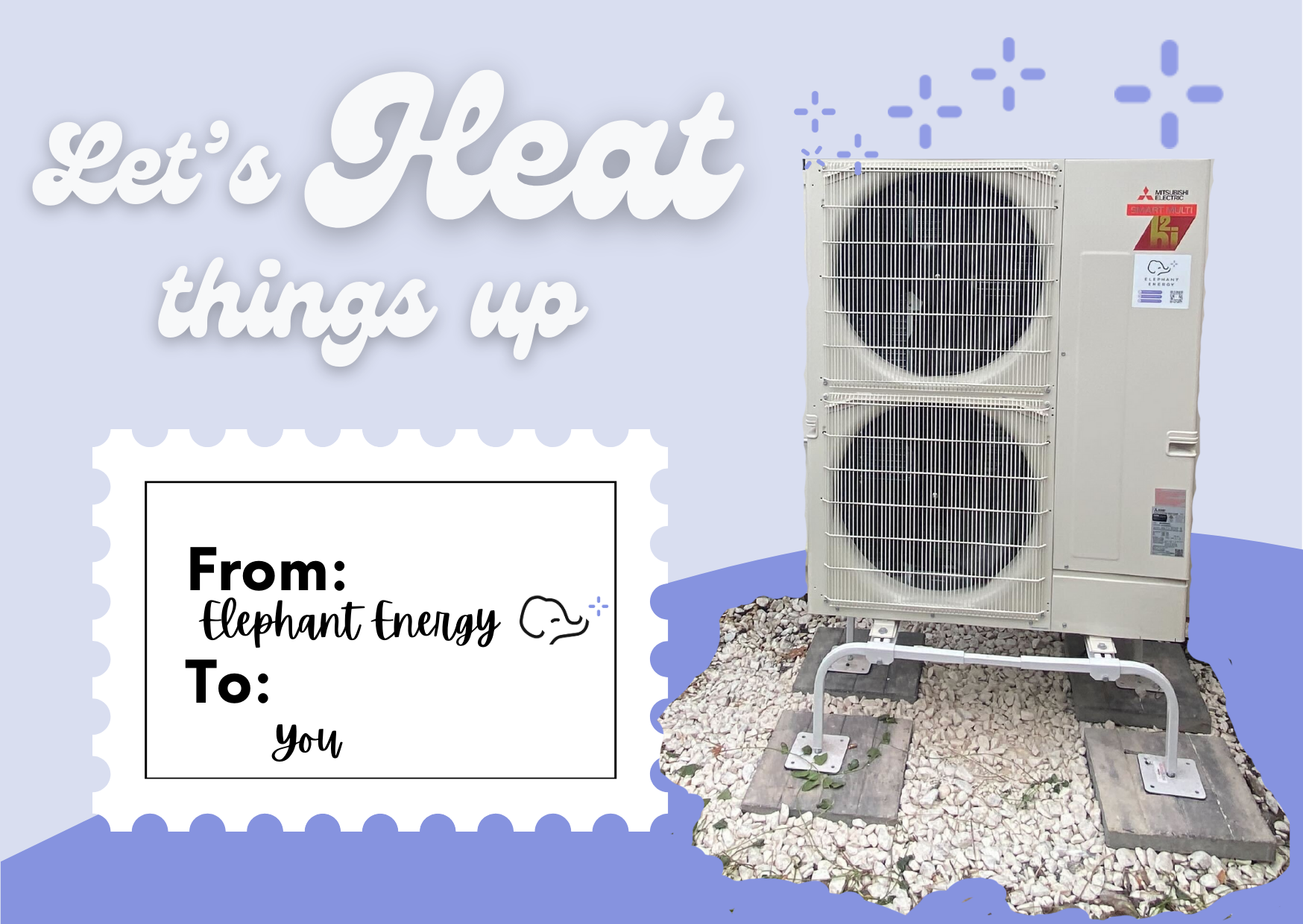
Social media is a great place to share your story! We created these love notes to make it easy. What is an example of a hard launched relationship? Sending ’em a Valentine, of course!

They are yours to save, use, and share! You can tag us on any of these platforms (Facebook, Instagram, Threads, Twitter, LinkedIn, and TikTok).


How to Hard Launch your heat pump without social media

No social media? No problem! When should you hard launch a relationship? Well, we’re taking advice from our friends at VeryWellMind on hard launching your relationship without social media, and translating that to heat pumps.

  • Send a group text to your friends or family members. This can include the name and a photo of your partner. Yes this works great! “Heat Pump” has entered the chat.
  • Call your friends and family individually to discuss your relationship. Another strong option – share your reasons for why you went electric in a good ol’ fashioned phone call
  • Bring your partner out with you to meet your friends. Ehh, this one’s a little trickier…but snapping a selfie with your heat pump to share with friends might just do the trick!
  • Take your partner home to meet your family. This one’s even harder. Then again, dropping off information about a heat pump might be the move
  • Plan a gathering at which you’ll introduce your new partner to your social circle. This one is a gem! Throw a “meet my heat pump” party (and be sure to send us photos)!

So yes, make the cheesy post about your partner (seriously, always make the cheesy post), but don’t forget to also affirm your commitment to a cause that also needs your support now more than ever – the climate.


Ready to get started? Join us in building a brighter future by electrifying everything, starting with homes. Your choice today shapes our collective tomorrow!

New Year, New Heat Pump: Don’t Wait to Take Climate Action in 2024

Congratulations on surviving the holidays with your in-laws and diving head first into your New Year’s resolutions! Is upgrading to a climate-friendly home on that list? Here’s a friendly yet firm nudge: 2024 is not just another year, it’s a crucial time to consider upgrading to a heat pump or heat pump water heater.

Why the rush? Well, it’s not only about enjoying a cozier home and smarter savings on your bills. We’re racing against time for the planet. The clock is ticking towards 2030, a year earmarked by experts as critical for reducing global carbon emissions. Every heat pump installed is a step towards that goal. Sticking with that old furnace or unreliable water heater? That’s not just a hassle waiting to happen; it’s a missed opportunity to join the fight against climate change.

So, why not kick off the year by making your home more efficient and comfortable? What’s the best time of year to buy a heat pump? Don’t wait – the time is now!

1. Accelerating the Tipping Point: Every Installation Counts

What is the future of heat pumps? Well, we are approaching a critical tipping point in heat pump adoption. Every installation is a significant contribution, providing essential social proof that accelerates the transition to green energy. By installing a heat pump now, you’re not only taking a personal stand against climate change but also inspiring confidence in others to join this growing movement. Your action today is a powerful catalyst in this critical journey.

2. The Slow Rebate Rollout: A Call to Act Now

While the Inflation Reduction Act offers the promise of direct-pay rebates, its slow implementation—with only a few states expected to roll out rebates this year—suggests that waiting may not be the best strategy. If you’re in a position to install a heat pump without relying on these incentives, it’s prudent to proceed. Waiting could mean missing out on immediate benefits and potentially facing uncertainties regarding rebate qualifications.

3. A Singular Opportunity for Long-Term Impact

Choosing your next HVAC system is a once in every two decades decision. Opting for a heat pump now avoids the risk of being forced to select a less sustainable option in an emergency. A proactive choice today ensures that you are not contributing to another two decades of emissions. At what age should a heat pump be replaced? When well-kept, you can expect 15+ years out of your heat pump.

4. Stay Ahead of the Demand Curve

Demand for heat pumps is expected to surge, especially once rebates do become more widely available. As we’ve seen happen before, this increase in demand will likely lead to higher prices and longer installation wait times. By acting now, you avoid these pitfalls, start saving on energy costs immediately, and contribute to stabilizing market demand.

5. Influence Your Community: Share Your Climate Journey

Installing a heat pump gives you a unique opportunity to influence your community. Rather than boasting, use this chance to share your experience upgrading to a climate-friendly home. Your story can (and will!) inspire others to make similar choices, creating a ripple effect of positive environmental impact. Send us an email at hello@elephantenergy.com – we’d love to share your story.

Conclusion: The Time to Act is Now

In 2024, the message is clear: waiting comes with a cost, too. Installing a heat pump is a critical step towards a sustainable future. It’s a decision that benefits you, your community, and the planet. If you’re able to install a heat pump this year, don’t wait for a ‘better time’ or more incentives – the time to act is now.

Ready to get started? Join us in building a brighter future by electrifying everything, starting with homes. Your choice today shapes our collective tomorrow!